-

I already knew at age 2 that I wanted to be a painter -
In my painting, I am searching for the image as a being -
When I’m really in the zone while painting, I long for a specific feeling that I want to experience when I look at the painting. That’s what guides me. -
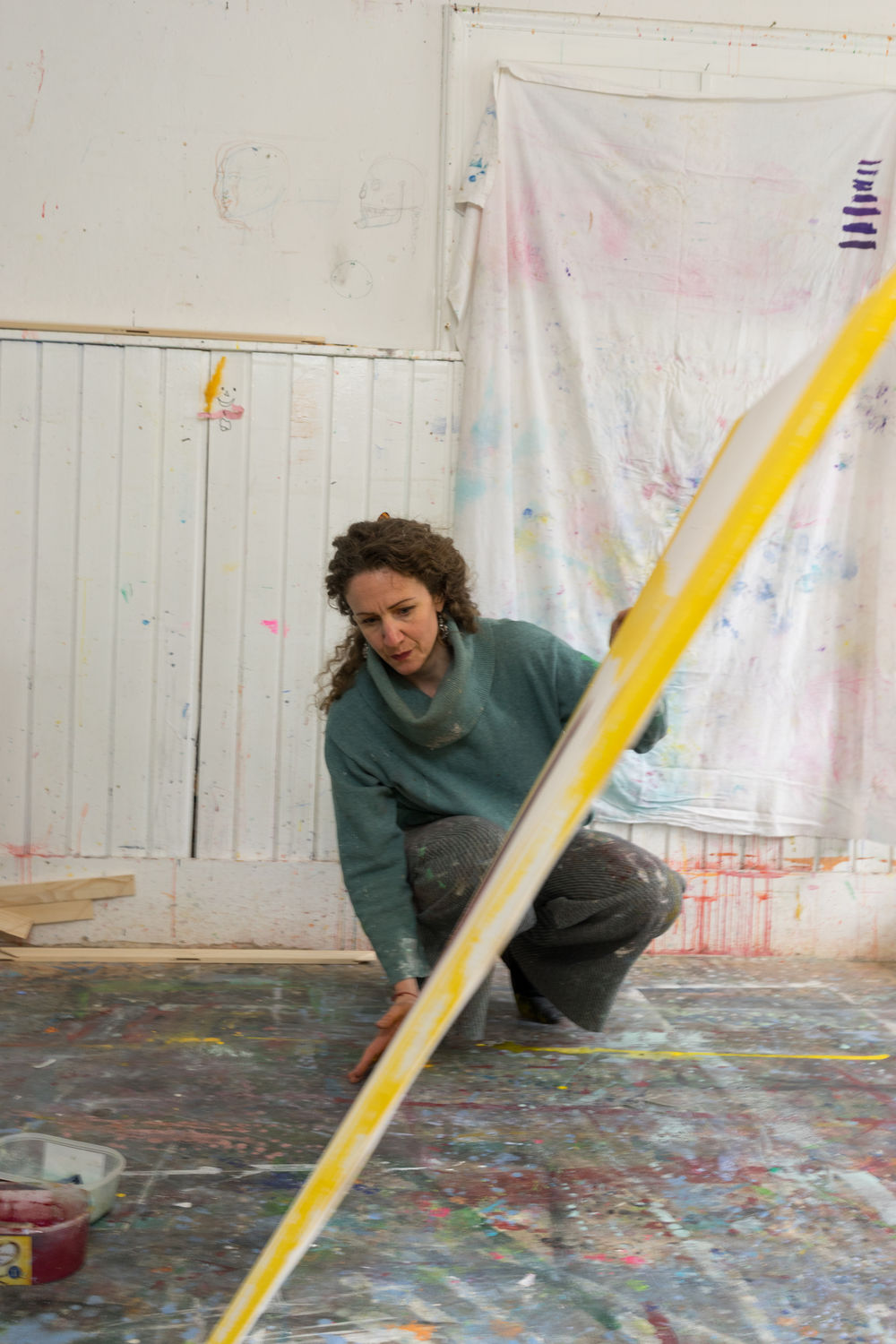
I have a rough idea of what I want to paint in the picture in terms of composition—where it’s difficult and where it’s easy – and I choose the format accordingly -
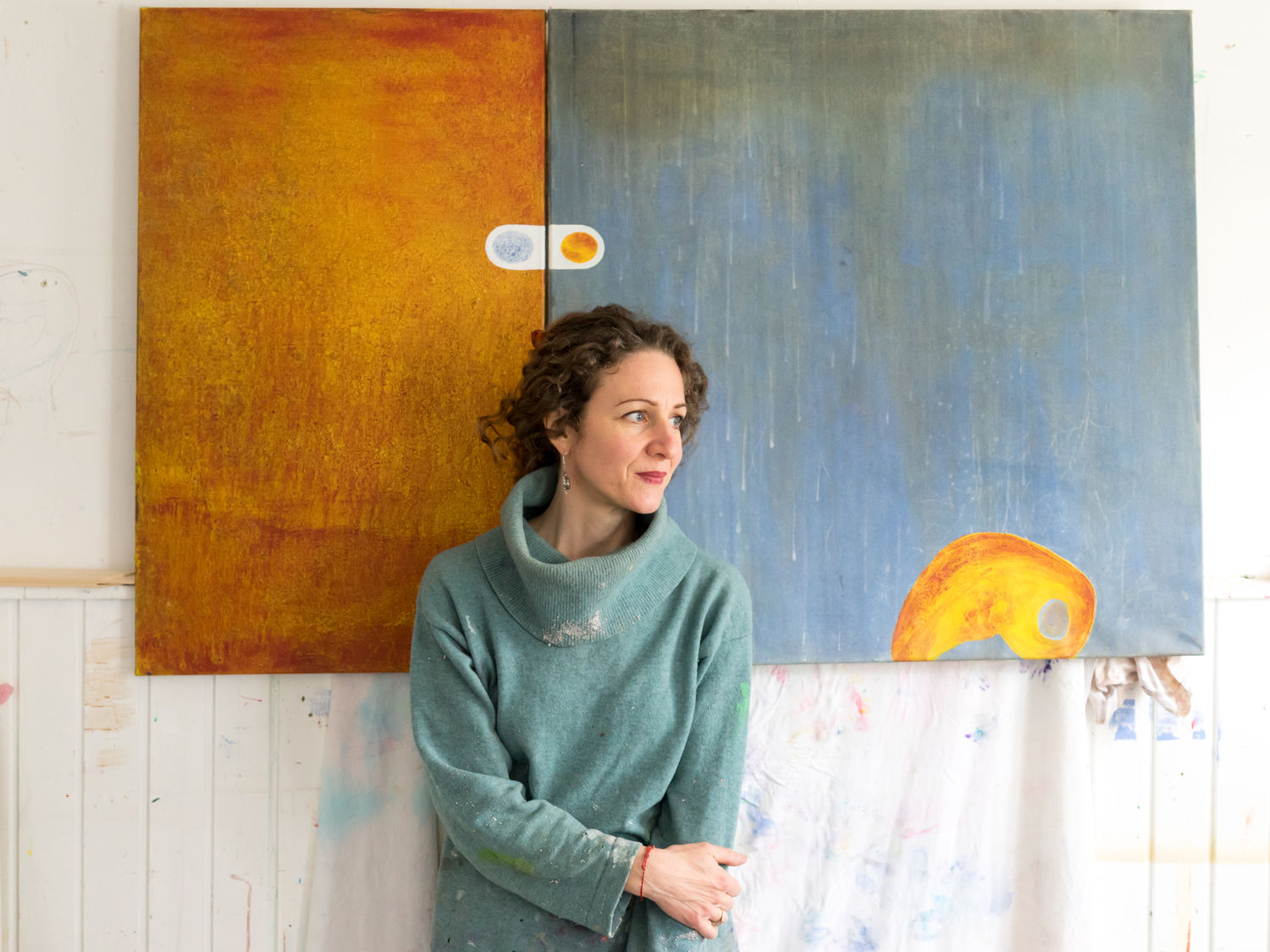
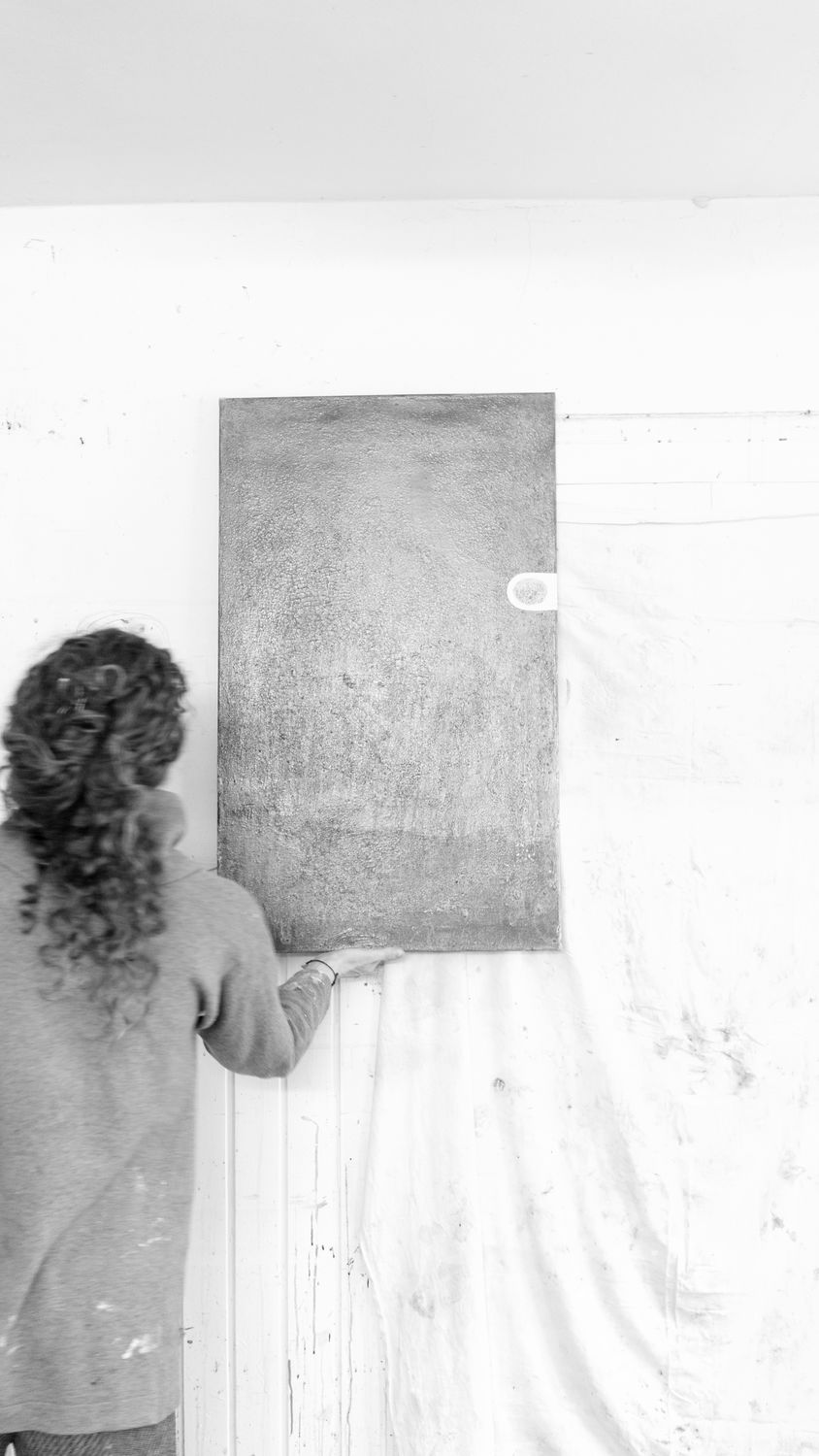
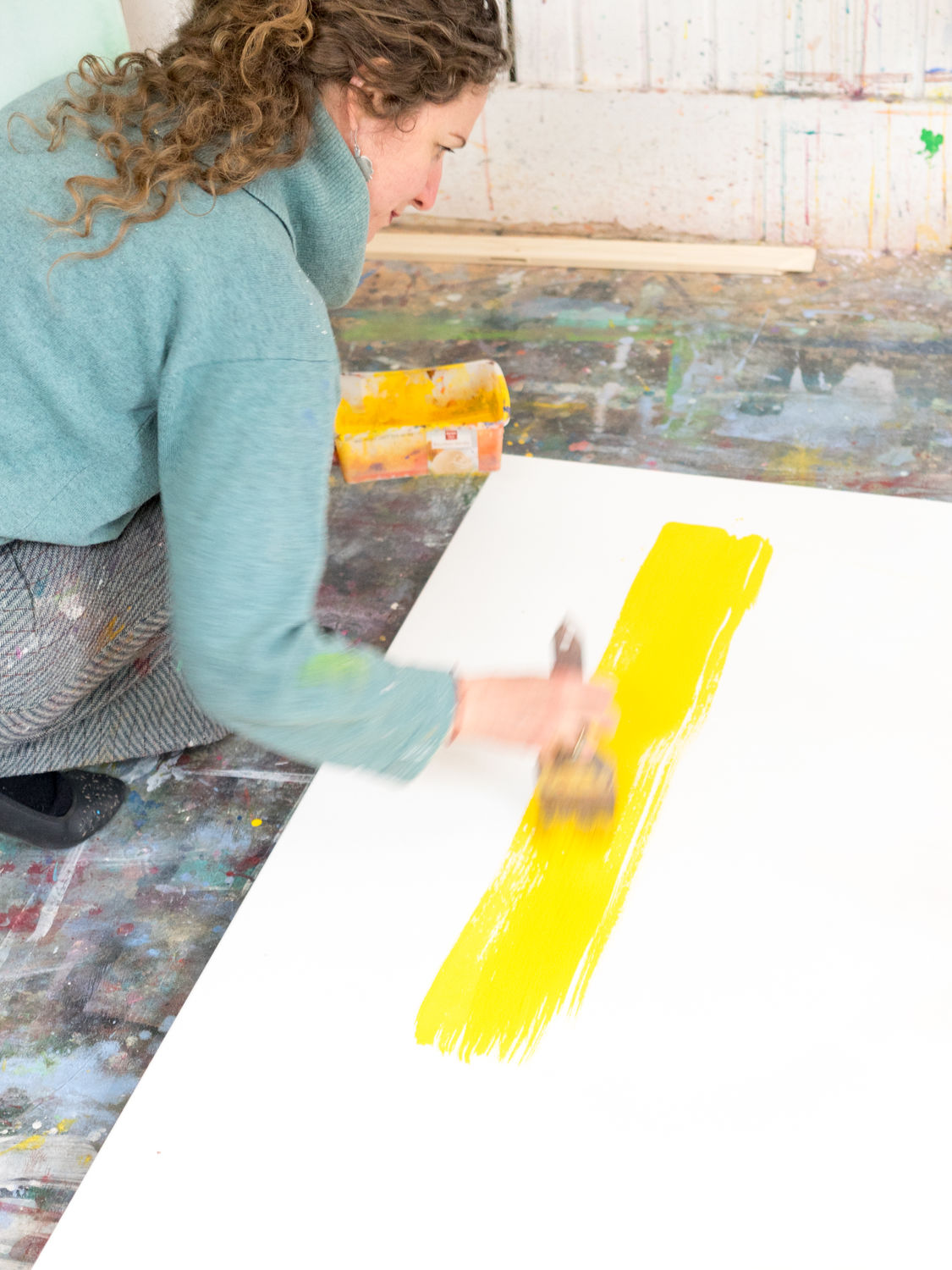
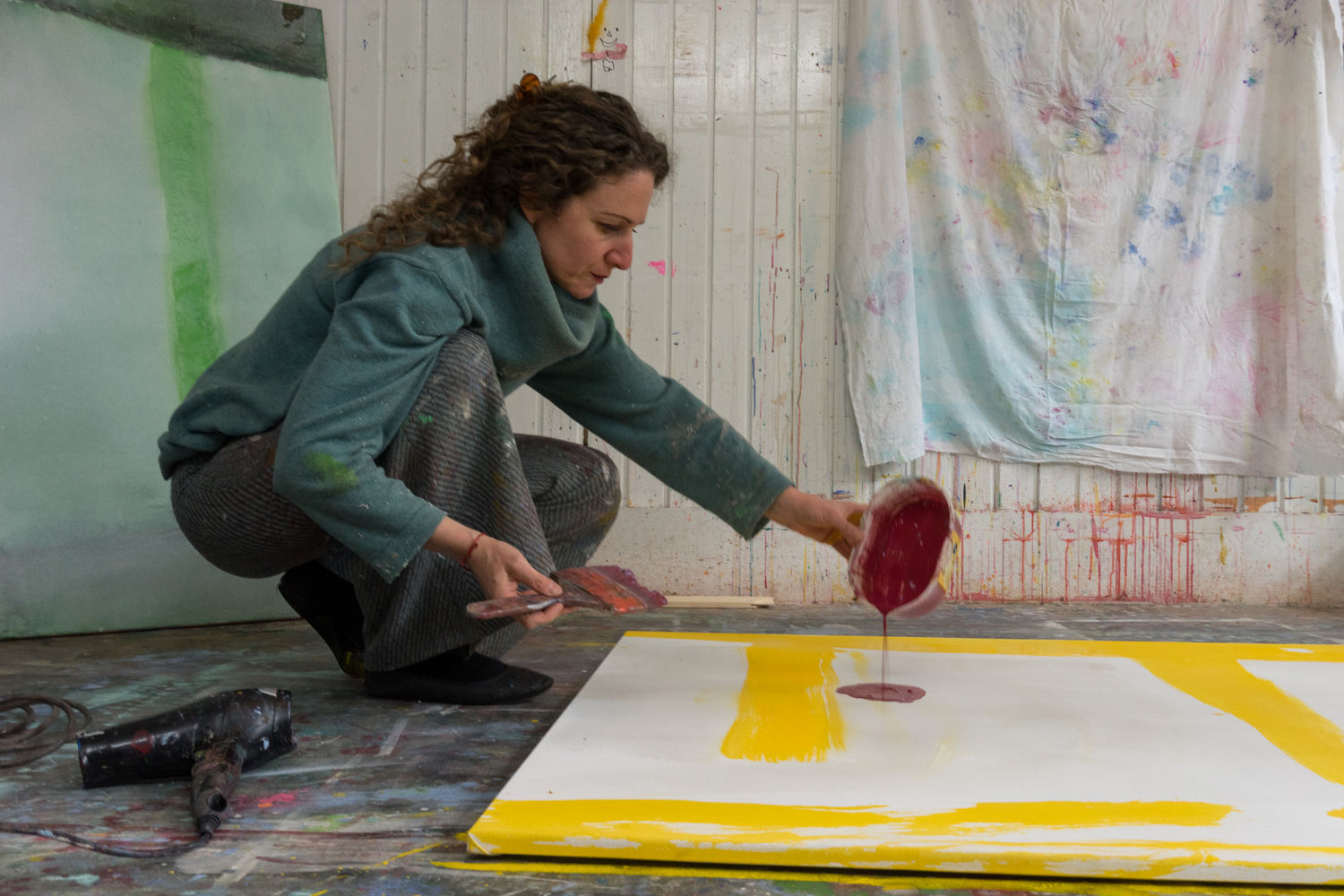
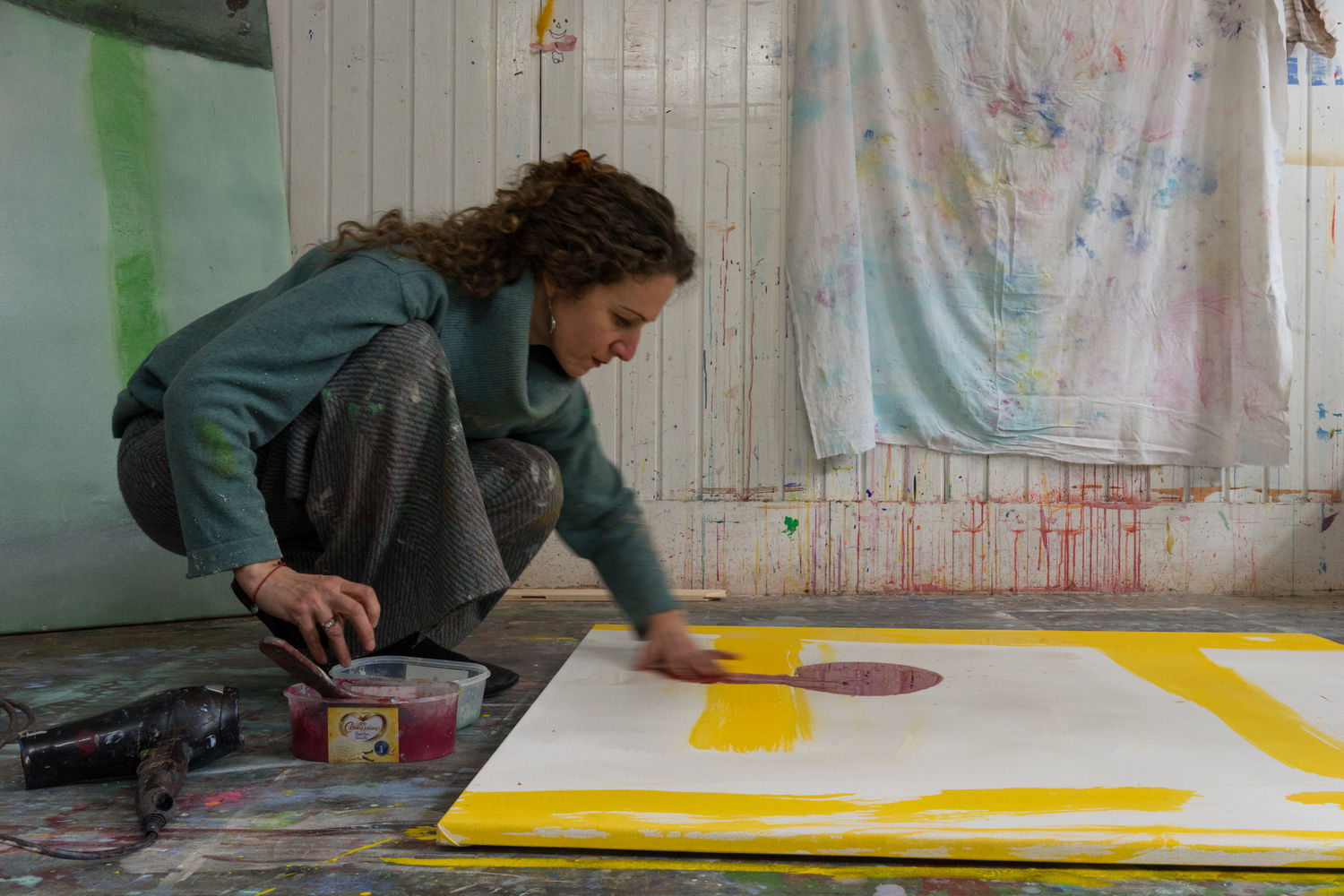
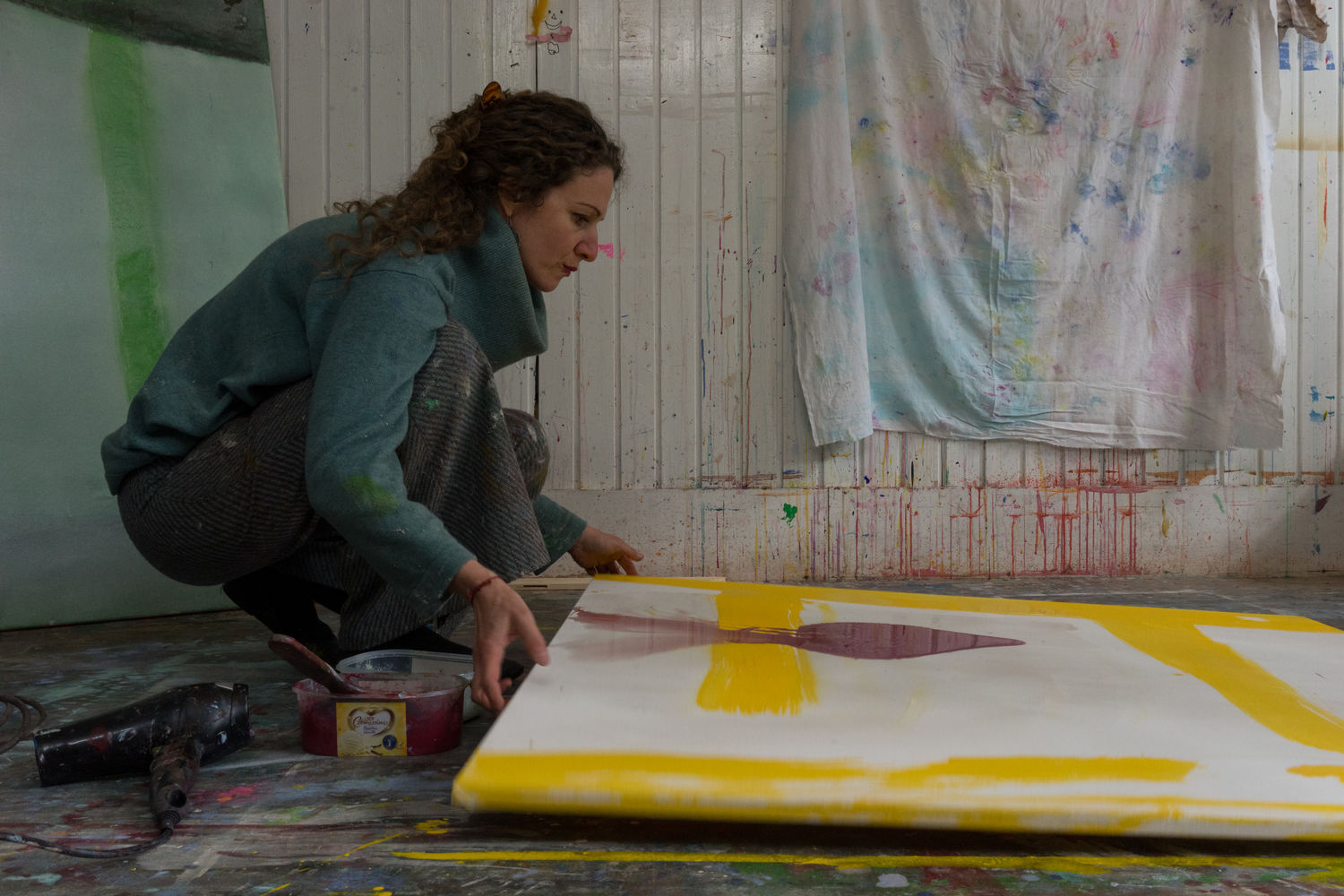
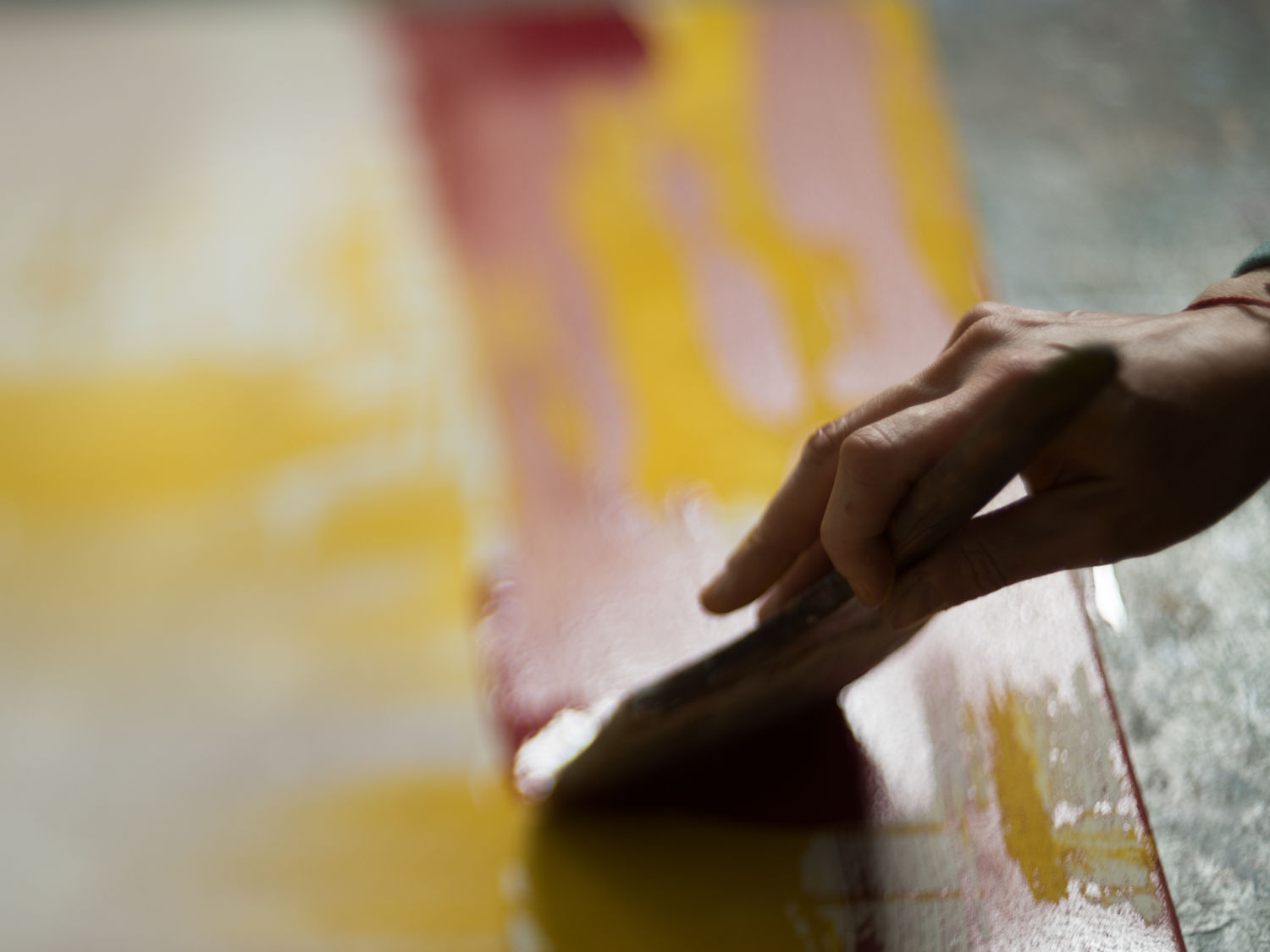
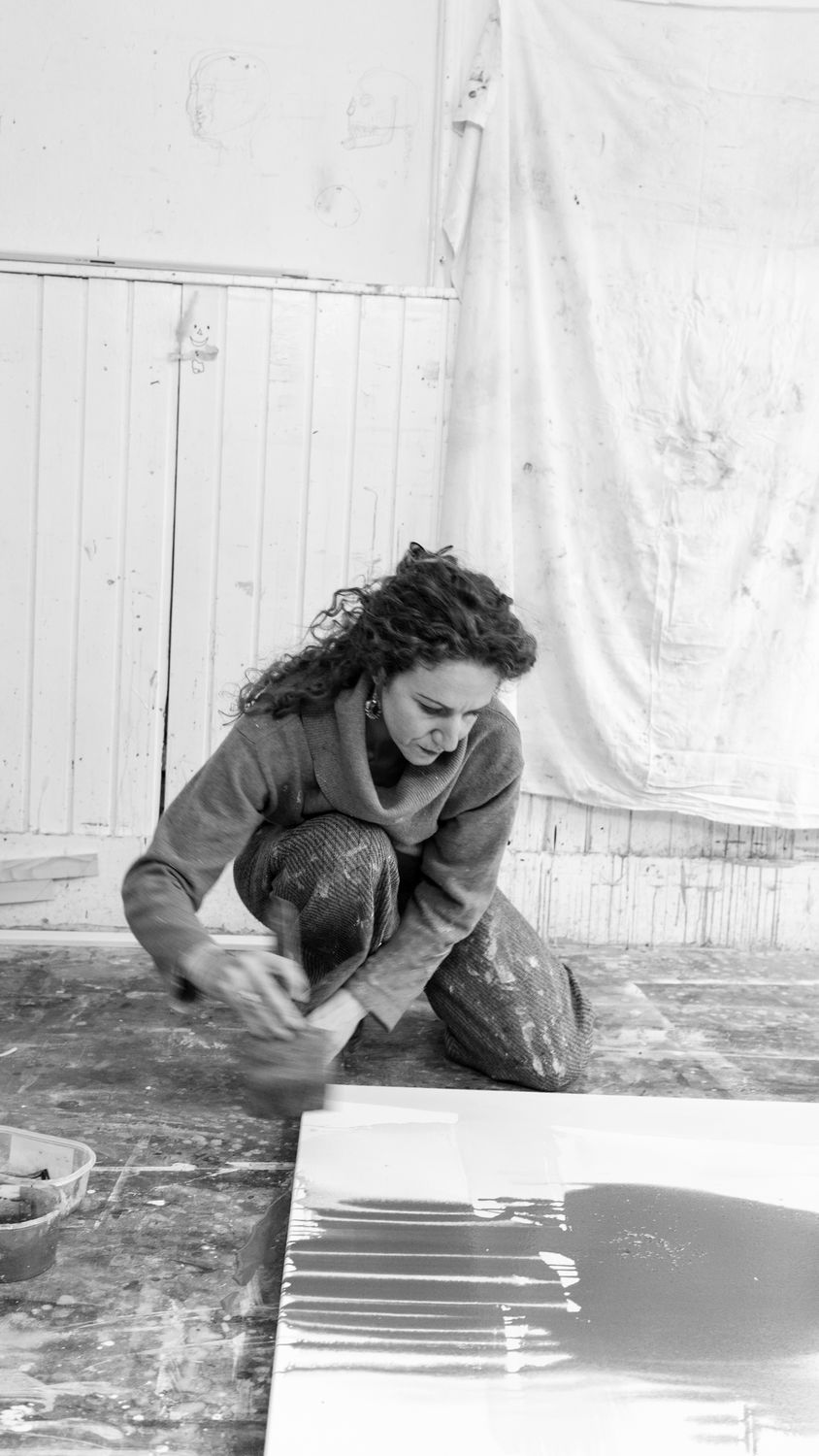
I always wanted to paint like that, in layers; then at some point I realized that the colors interact within the layers – depending on which color is on top of which – and then I realized that by painting layer upon layer, colors emerge that you can’t mix in a palette -
I don’t have that problem with a blank canvas: for me, it’s usually the case that the undercoat already tells me where the painting is headed -
-
Every chemical substance has a very specific property that determines how it behaves – for example, whether it precipitates quickly in a solution, sinks rapidly, floats, settles in the depressions of a surface, or sticks to the peaks – and each chemical substance behaves differently based on its molecular structure -
-
-
From today´s perspective I would say that we need to carry on with part of the creation -
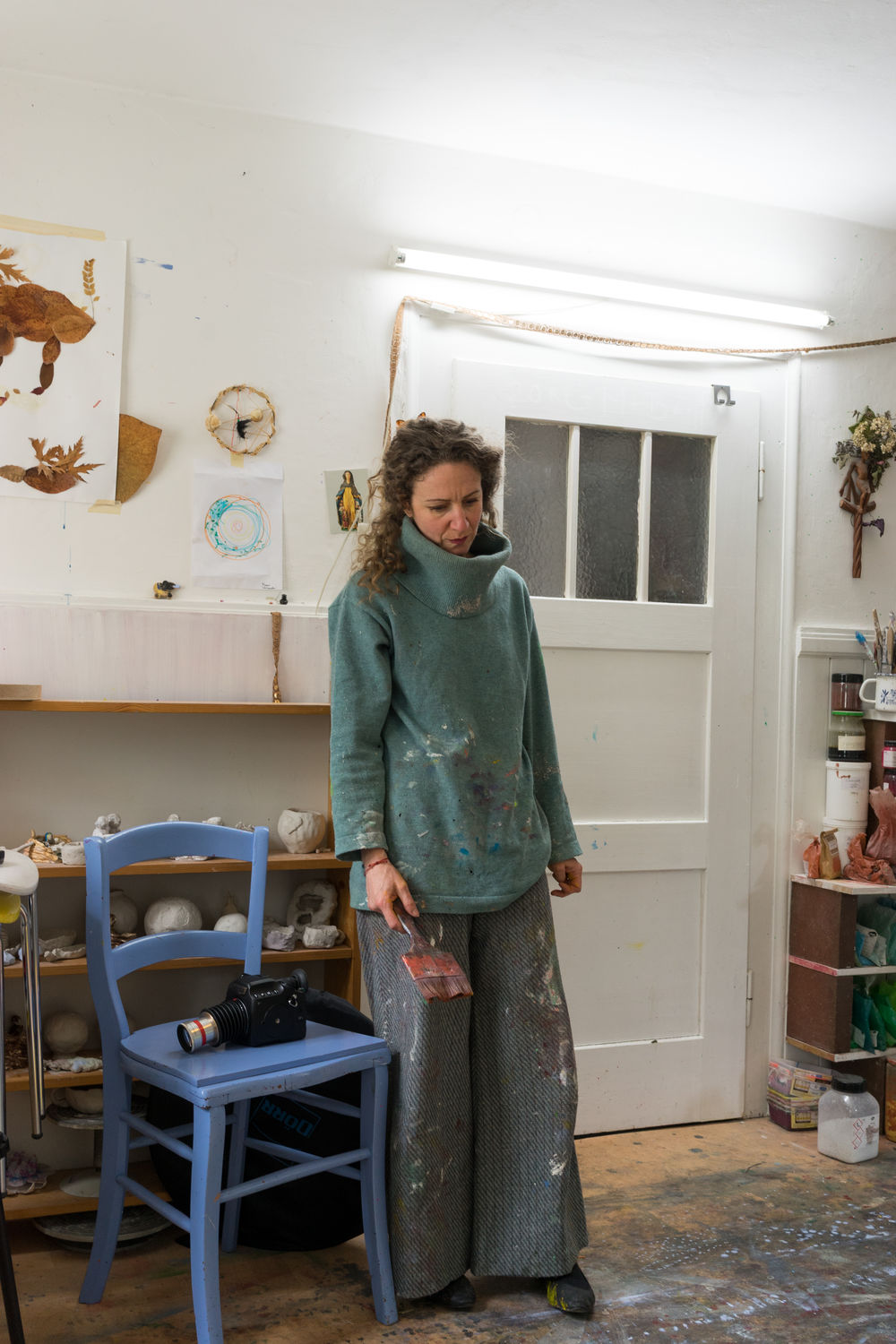
I always feel like using a certain color, so I start with that one – or rather: I don’t start with that one; instead, since I now know what needs to go underneath it, I start with what needs to go underneath it -
At some point during my time at the academy, I realized that you have to find something that’s truly close to your heart -
I’m still looking for a bright, clear, soft green -
…there was always a gray haze in it that I didn’t like… later I realized that it was all the feldspars and diluents -
But I always, always, always have to try new things, which means I end up throwing away a lot of paintings. About a year ago, I cut up 30 paintings – just for fun – and they were big ones. -
Much of what occurs in nature cannot be used in my style of painting because, for example, all those clays are such a hodgepodge of different chemical substances -
-
-
The problem with earth pigments is that they never form a grid but always end up looking like a paste; that’s why I can’t use them, since I like working with grids. That’s also why I have a problem with the green palette: there aren’t that many green pigments available in a grid form.
I already knew at age 2 that I wanted to be a painter In my painting, I am searching for the image as a being When I’m really in the zone while painting, I long for a specific feeling that I want to experience when I look at the painting. That’s what guides me. I have a rough idea of what I want to paint in the picture in terms of composition—where it’s difficult and where it’s easy – and I choose the format accordingly I always wanted to paint like that, in layers; then at some point I realized that the colors interact within the layers – depending on which color is on top of which – and then I realized that by painting layer upon layer, colors emerge that you can’t mix in a palette I don’t have that problem with a blank canvas: for me, it’s usually the case that the undercoat already tells me where the painting is headed Every chemical substance has a very specific property that determines how it behaves – for example, whether it precipitates quickly in a solution, sinks rapidly, floats, settles in the depressions of a surface, or sticks to the peaks – and each chemical substance behaves differently based on its molecular structure From today´s perspective I would say that we need to carry on with part of the creation I always feel like using a certain color, so I start with that one – or rather: I don’t start with that one; instead, since I now know what needs to go underneath it, I start with what needs to go underneath it At some point during my time at the academy, I realized that you have to find something that’s truly close to your heart I’m still looking for a bright, clear, soft green …there was always a gray haze in it that I didn’t like… later I realized that it was all the feldspars and diluents But I always, always, always have to try new things, which means I end up throwing away a lot of paintings. About a year ago, I cut up 30 paintings – just for fun – and they were big ones. Much of what occurs in nature cannot be used in my style of painting because, for example, all those clays are such a hodgepodge of different chemical substances The problem with earth pigments is that they never form a grid but always end up looking like a paste; that’s why I can’t use them, since I like working with grids. That’s also why I have a problem with the green palette: there aren’t that many green pigments available in a grid form.